How do you serve with backspin?
Hold the bat loosely, open the face so it points upwards, and brush quickly under the back of the ball in a downward direction. Contact the ball low, around net height, and aim for it to bounce twice on your opponent's side. The finer and faster the brush, the more backspin you create.
Start with a legal serve
Every spin serve starts from the same legal toss: open palm, near-vertical toss of at least 16 cm, ball hit on the way down from behind your end line. If you are not sure of the rules, read our serve rules guide first.
The principle: brush, don't hit
Table Tennis England's coaching advice compares spin to spinning a top: you have to brush the ball quickly. Where you brush decides the spin. Picture the back of the ball as a clock face:
- brush between 3 and 12 o'clock in an upward direction for topspin;
- brush between 3 and 6 o'clock in a downward direction for backspin;
- brush between 3 and 9 o'clock sideways for sidespin.
For all of them you need a relaxed grip and wrist so the bat can move quickly.
The short backspin serve
- Keep the action simple. Coach Matt Hetherington, writing for JOOLA, recommends isolating the forearm, waist, wrist and fingers at first. A big swing from the shoulder makes the serve harder to control.
- Contact low. Table Tennis England suggests contacting a short backspin serve at about net height. A linear motion that contacts towards the bottom of the ball works best.
- Length first, spin second. Practise getting the ball short, with at least two bounces on the other side, and low over the net before you try to add more rotation.
- Tighten through contact. A fine contact creates more spin, and using the fingers and thumb to tighten the grip through the contact helps create friction.
The sidespin serve
Use the same toss and low contact, but brush across the back of the ball from one side to the other (3 to 9 o'clock). Most players start with a forehand pendulum-style sidespin. Sidespin makes the ball curve and kick sideways off the receiver's bat, so even a modest amount causes mistakes at club level. Combine it with a little backspin (brushing slightly downwards) or topspin (slightly upwards) for variation.
The long fast serve
Mix in long serves so your opponent cannot step in on every short one. Table Tennis England describes a deep, low, fast serve contacted only a few centimetres above the table, bouncing very close to your own end line and landing near the opponent's end line.
A target drill you can do alone
Hetherington suggests building backspin in stages: first make the ball bounce many times on the other side, then make it stop, and finally make it come back towards the net. Add targets: a towel for short serves near the net, a cone or box near the end line for long ones. Count how many of ten land where you aimed, and keep a note from session to session.
Does equipment matter?
Technique matters far more, but a clean, grippy rubber helps. Rubbers lose grip as they wear, so check our guide on when to replace a rubber and keep your surface clean (rubber care guide).
FAQ
Why does my backspin serve go long?
Usually the bat is moving forward rather than downward and under the ball, or the first bounce is too close to your end line. Brush more under the ball and let it land nearer the middle of your own half.
Should I serve forehand or backhand?
Table Tennis England notes that most top players serve mainly with the forehand because it is easier to vary and disguise spin, but it recommends trying both.
How many balls do I need to practise?
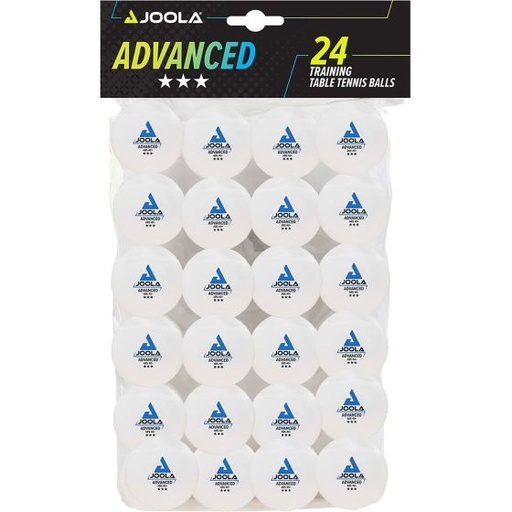
As many as you can pick up at once. A bucket of 50 to 120 training balls saves a lot of time collecting.
Kit for serve practice
Training balls in bulk and a grippy rubber such as Yasaka Mark V are a cheap way to make serve practice more productive.
Sources: Table Tennis England: service and spin · JOOLA: Learn and improve the basic backspin serve (Matt Hetherington) · ITTF Statutes 2026 (Laws of Table Tennis)