How do you play a forehand topspin?
Stand with your right foot slightly behind your left (for a right-hander), load your weight onto the back leg and turn your hips and shoulders back. Then drive up and forward from the legs, rotate the hips and waist through, and brush the ball upwards and forwards with a slightly closed bat, adding a quick elbow rotation just before contact. Finish balanced and ready for the next ball.
Drive or loop?
A forehand drive is a controlled topspin stroke where speed dominates. A loop produces heavier topspin by twisting more at the hips, loading the back leg and brushing the ball rather than hitting through it. The loop is the most versatile attacking stroke in the game: you can play it against backspin, topspin and no-spin balls, close to or far from the table.
Step by step (right-handed player)
- Stance. Feet a little wider than shoulder width, knees bent, right foot slightly behind the left. If the right foot is not back, you will struggle to rotate your hips and to load your weight.
- Backswing. Turn the hips and shoulders to the right and drop the right shoulder slightly, shifting weight onto the right leg. Keep the arm relaxed with the elbow away from the body.
- Forward swing. Push off the right leg and rotate the hips and waist towards the ball. The arm follows the body, not the other way round.
- Contact. Brush the ball with a closed bat angle, moving upwards and forwards. Against topspin you can contact at or near the top of the bounce. Engage the elbow just before contact; you do not need to flick the wrist, which mostly adds inconsistency.
- Finish and recover. Weight transfers to the left leg, the bat finishes up and in front of you, and you return to the ready position.
Looping against backspin
Against backspin you need to start lower and swing more upwards. Bend your knees more, drop the right shoulder further so the stroke starts around knee height, and focus on brushing the ball rather than hitting it hard. You do not need to take the ball at the top of the bounce; let it drop slightly and lift it.
Common mistakes
- No hip rotation. Even good players arm the ball. Let the hips do the work.
- Not loading the back leg. Without the weight shift, the loop loses power or other parts of the stroke overcompensate.
- No elbow. Removing the late elbow rotation costs spin and speed.
- Hitting flat. Looping comes from brushing the ball with an angled contact, not from driving through it.
- Looping the wrong ball. A short ball will bounce twice before you can loop it, so flick or push it instead. If you are rushed, block or drive.
Drills to build it
- Shadow play. Twenty slow shadow loops in front of a mirror before training help fix the stroke shape.
- Multiball. A partner feeds backspin balls to your forehand from a bucket; loop each one, recover, repeat.
- Loop to block. Your partner blocks to your forehand while you loop steadily at 60 to 70 per cent.
Does your bat matter?
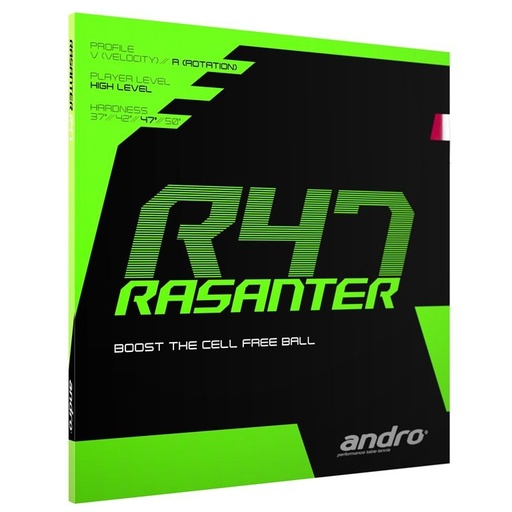
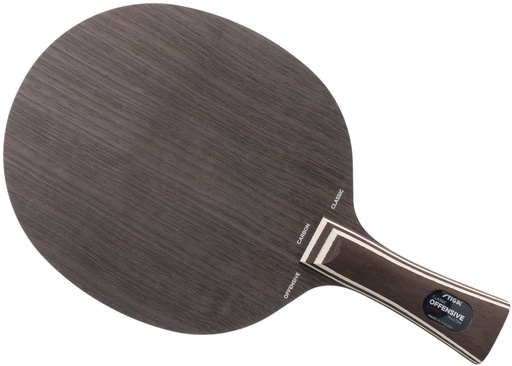
Any decent rubber will let you learn the loop. Grippier, softer rubbers make it easier to lift backspin; harder, faster rubbers reward a full swing. If you are moving up from a beginner set-up, our intermediate blades guide and sponge hardness guide will help.
FAQ
Should I use my wrist in a forehand loop?
Not for the basic stroke. The power comes from the legs, hips and elbow; wrist flicks tend to make it less consistent.
Why does my loop go into the net?
Against backspin, usually because the bat is too closed or the swing is too forward. Start lower and swing more upwards.
Why does my loop go long?
Against topspin the bat is often too open. Close the bat angle and brush more over the ball.
Kit for looping
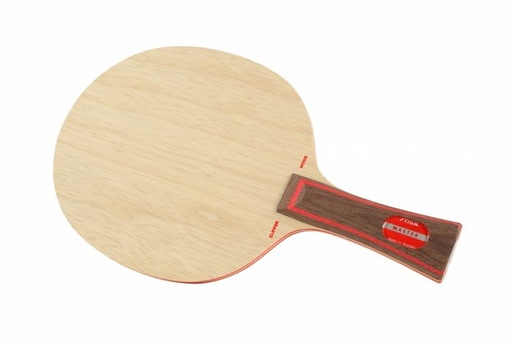
For a club attacker, a tensor like Tibhar Evolution MX-P on a blade such as the Stiga Clipper is a classic looping set-up.
Sources: Table Tennis Teacher: How to forehand loop · Racket Insight: Shadow play guide · PingSkills: Practising alone